I started in computer security on BBS networks in the 1980s. Today I teach AP Computer Science and Cybersecurity while building toward a full-time remote role in SOC analysis or penetration testing.
My TryHackMe profile sits at USA Rank #76, Top 1% globally. I hold a Physical Penetration Testing certification, am completing Security+ on the CompTIA track, and document every room I complete in this blog.
I also run MakerMindStudio, a 3D printing and laser engraving operation, and publish health and systems writing under the FACTOTUM Protocol.
TryHackMe room writeups published as completed. Each walkthrough covers the tools used, the logic behind each step, and the security concepts the room demonstrates.
Code review for security vulnerabilities with a written findings report, severity ratings, and specific fixes. Three tiers: Entry Scan ($499), Standard Audit ($1,200–$2,500), and Full Certification. Entry Scan turnaround is 72 hours.
I review your resume and LinkedIn profile against current cybersecurity and tech hiring standards. You get a marked-up document with specific rewrites, not a checklist of generic suggestions.
A structured 90-day plan built around your current certifications, experience level, and target role. Covers what to study, what to build, and what to skip.
Line-by-line feedback on AP Computer Science Free Response Questions. Written for students preparing for the exam or teachers who want a second set of eyes on student work.
Author: Mario Martinez Jr. (ku5e / Gary7) | TryHackMe USA Top 1%
Difficulty: Easy
Topics: Incident Response, Security Alerts, Asset Inventory, IoC Management
Answers are redacted within the narrative to allow you to complete the tasks on your own, but a full table of answers is available at the end of this walkthrough.
This room positions you as an incident responder at SwiftSpend Financial (SSF), a fictional organization facing a potential security compromise. You work through a series of support tickets in Outlook, cross-reference an Asset Inventory, and populate a Spreadsheet of Doom (SoD) with indicators of compromise. The room frames itself around identification, scoping, and the feedback loop between the two. In practice, it functions as an email reading exercise where you extract IoCs from ticket exchanges and map them to organizational assets.
...
TryHackMe: Eradication and Remediation
Author: Mario Martinez Jr. (ku5e / Gary7) | TryHackMe USA Top 1%
Difficulty: Medium
Topics: Incident Response, Eradication, Remediation, MITRE ATT&CK, Jenkins, Cyber Kill Chain
Answers are redacted within the narrative to allow you to complete the tasks on your own, but a full table of answers is available at the end of this walkthrough.
This is the fourth room in the Live IR Module, picking up after Preparation, Identification and Scoping, and Threat Intel and Containment. By this point the scope is set and the bad guys are identified. The job now is to remove them cleanly, patch what let them in, and bring systems back online without handing the attacker a warning signal in the process. The room tests your sleuthing ability as much as your IR theory — and the MITRE ATT&CK Framework proves its worth again.
...
Stop Installing Enterprise Security Tools Before You Can Use Them
The first cybersecurity tool most people install is a SIEM. A SIEM without the fundamentals is a dashboard full of alerts you cannot interpret.
The pattern repeats: someone decides to get into cybersecurity, reads a list of enterprise tools, installs a Splunk trial or a commercial EDR, stares at it for two weeks, and concludes that security work is too complex to break into. The tool was not the problem. The sequence was.
...
I Built a Cybersecurity Home Lab for Free. So Can You.
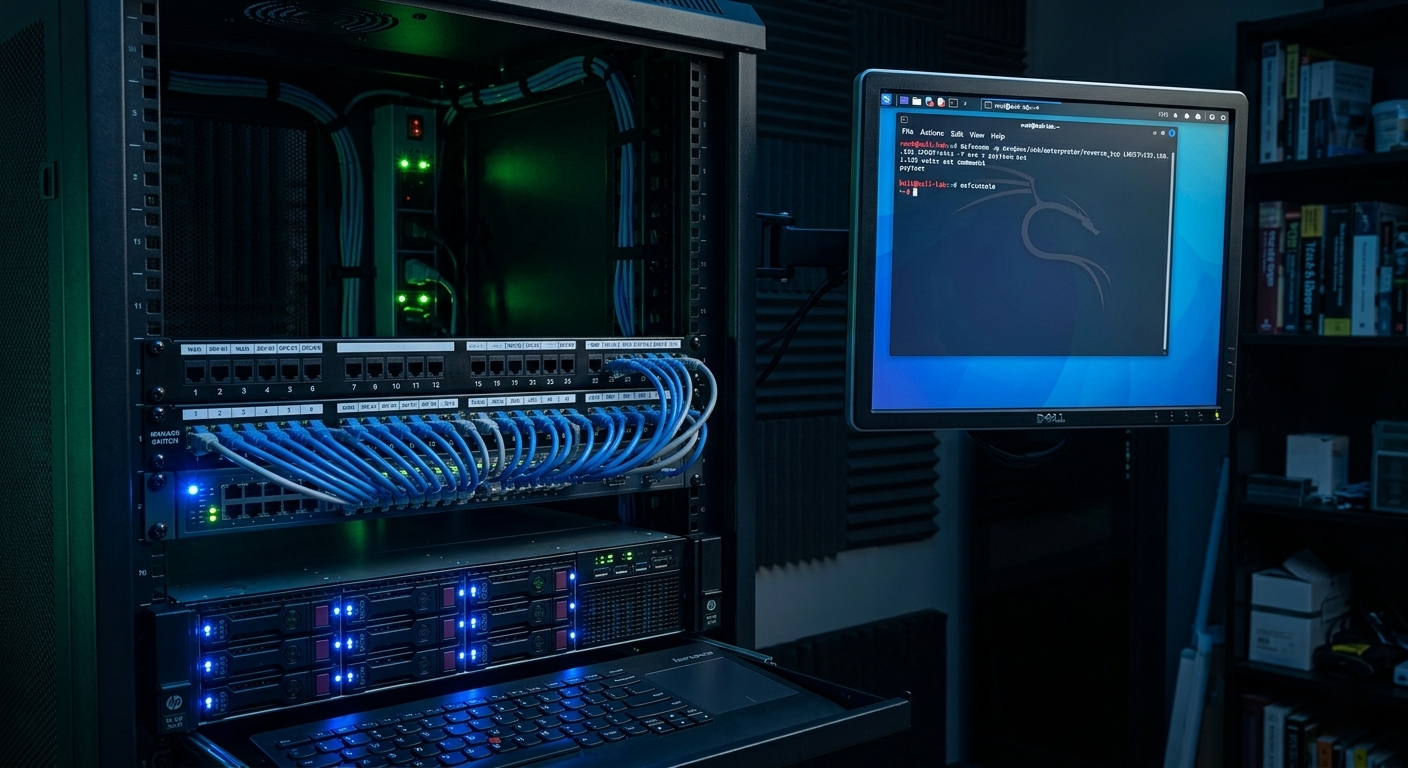
My first home lab was five used computers networked together with old vulnerable routers I picked up for almost nothing. Each machine had a specific role. It worked, but it was loud, it took up space, and maintaining five physical boxes taught me more about cable management than cybersecurity.
Now I run VirtualBox on a homebuilt rack server. Same concept, a fraction of the footprint.
The most common thing I hear from people trying to break into cybersecurity is that they don’t know where to start. The lab is where you start. And it costs nothing.
...
How to Use AI as a Study Partner Without Using It as a Cheat Sheet
You can ask AI for the answer to every Security+ practice question.
You will pass the practice test and fail the exam.
I am studying for Security+ right now. I use AI every day for it. The difference between using it well and using it badly comes down to one question: are you asking it to give you answers, or asking it to help you build understanding?
Asking AI for the answer produces a correct answer. It does not produce retention. The moment you close the chat, the answer is gone. You have outsourced the cognitive work without doing any of it.
...
What Security Certifications Assume You Already Know
I got my Novell NetWare certification in the 1990s. Between jobs after that, I ran network cables and configured routers as freelance work. When I moved into IT full time, I was configuring the same routers.
When I eventually moved into cybersecurity, I did not struggle with the concepts the way I watched others struggle. Not because I was smarter. Because I already knew what a subnet was, how routing worked, and what happened to a packet between point A and point B.
...
Building a Cybersecurity AI Lab on a Raspberry Pi for Under $200
The AI tools showing up in security work right now run in the cloud, behind APIs, on someone else’s hardware. You send data out, you get a response back, and you have no visibility into what happens in between. For learning, that model has a ceiling. You cannot break what you cannot see.
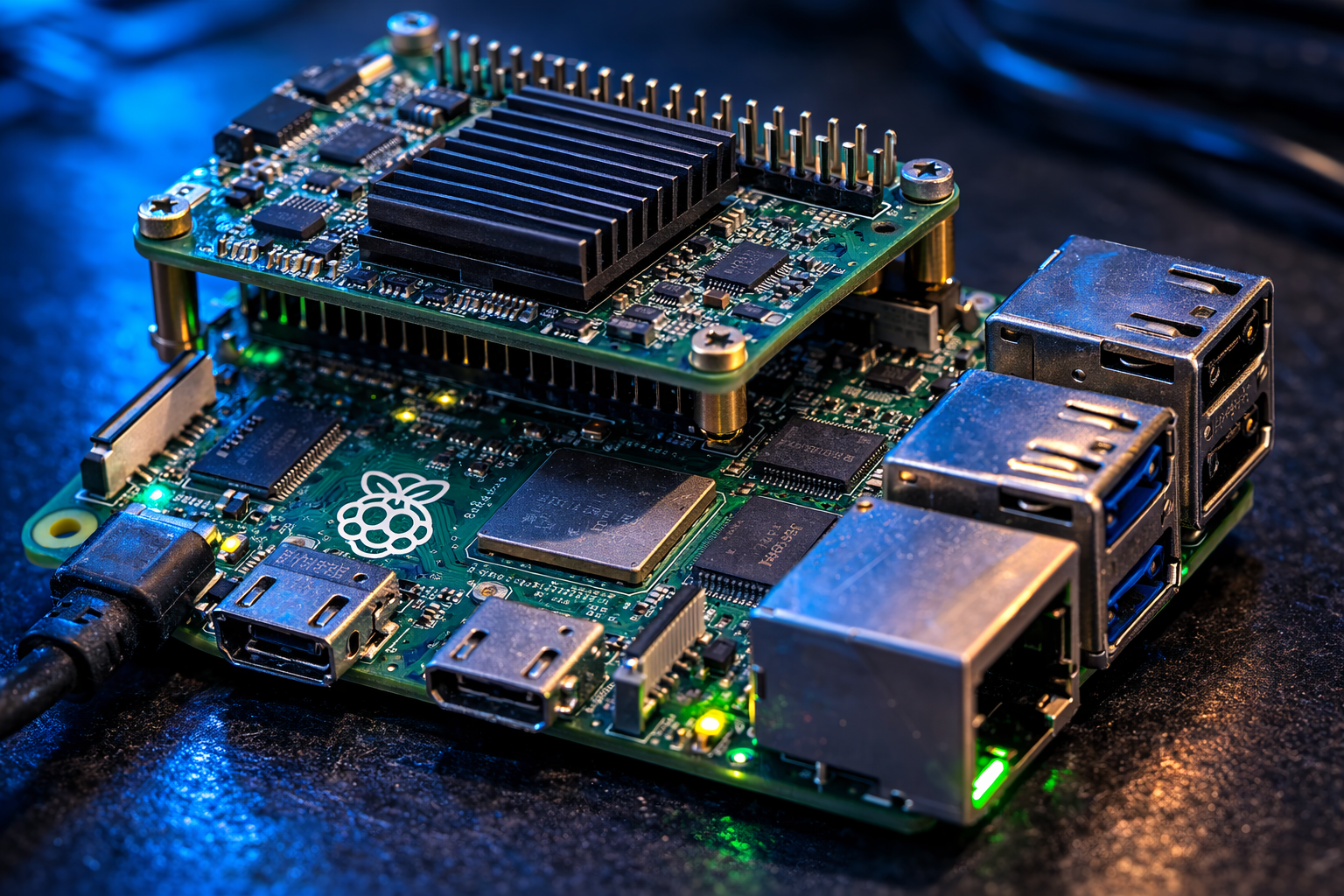
A Raspberry Pi 5 with a Hailo AI accelerator changes that. Under $200 in hardware. Runs local inference. No data leaves the device. You can build network traffic anomaly detection, behavioral analysis pipelines, and IoT monitoring on the same board, in your own environment, with full control over every layer of the stack.
...
AGI Is Good for Humanity. It's a Problem for Your Network.
The optimistic version of artificial general intelligence is not hard to imagine. A world where disease gets solved faster, energy is abundant, and human labor shifts toward things humans actually want to do. Gene Roddenberry built a franchise on that premise. The technology trajectory Altman describes follows a logical endpoint: compounding capability with no ceiling in sight.
The destination is fine. The transition is where the damage happens.
The Operator in the Room Altman’s role at OpenAI is operational: he decides when to ship. In 2022, OpenAI’s leadership was debating whether to release ChatGPT at all, arguing for a more powerful version. Altman pushed to go. ChatGPT launched in November 2022 and reached 800 million weekly users. The timing was his call.
...
TryHackMe: Atomic Bird Goes Purple #2
TryHackMe: Atomic Bird Goes Purple #2 Author: Mario Martinez Jr. (ku5e / Gary7) | TryHackMe USA Rank #76 | Top 1%
Difficulty: Medium
Topics: Purple Teaming, Threat Emulation, Atomic Red Team, Credential Access, Defense Evasion, Persistence, Registry Manipulation, Service Creation
Answers are redacted within the narrative to allow you to complete the tasks on your own, but a full table of answers is available at the end of this walkthrough.
...
TryHackMe: Atomic Bird Goes Purple #1
TryHackMe: Atomic Bird Goes Purple #1 Author: Mario Martinez Jr. (ku5e / Gary7) | TryHackMe USA Rank #76 | Top 1%
Difficulty: Medium
Topics: Purple Teaming, Threat Emulation, Atomic Red Team, Windows Event Logs, Sysmon, Aurora EDR
Answers are redacted within the narrative to allow you to complete the tasks on your own, but a full table of answers is available at the end of this walkthrough.
This room puts you inside a Purple Team exercise built around the Atomic Red Team project. You emulate real adversary tactics across system discovery, credential capture, file manipulation, clipboard abuse, and system file hijacking, then investigate the artifacts each technique leaves behind. The goal is not just to run attacks but to understand what defenders see when those attacks run.
...