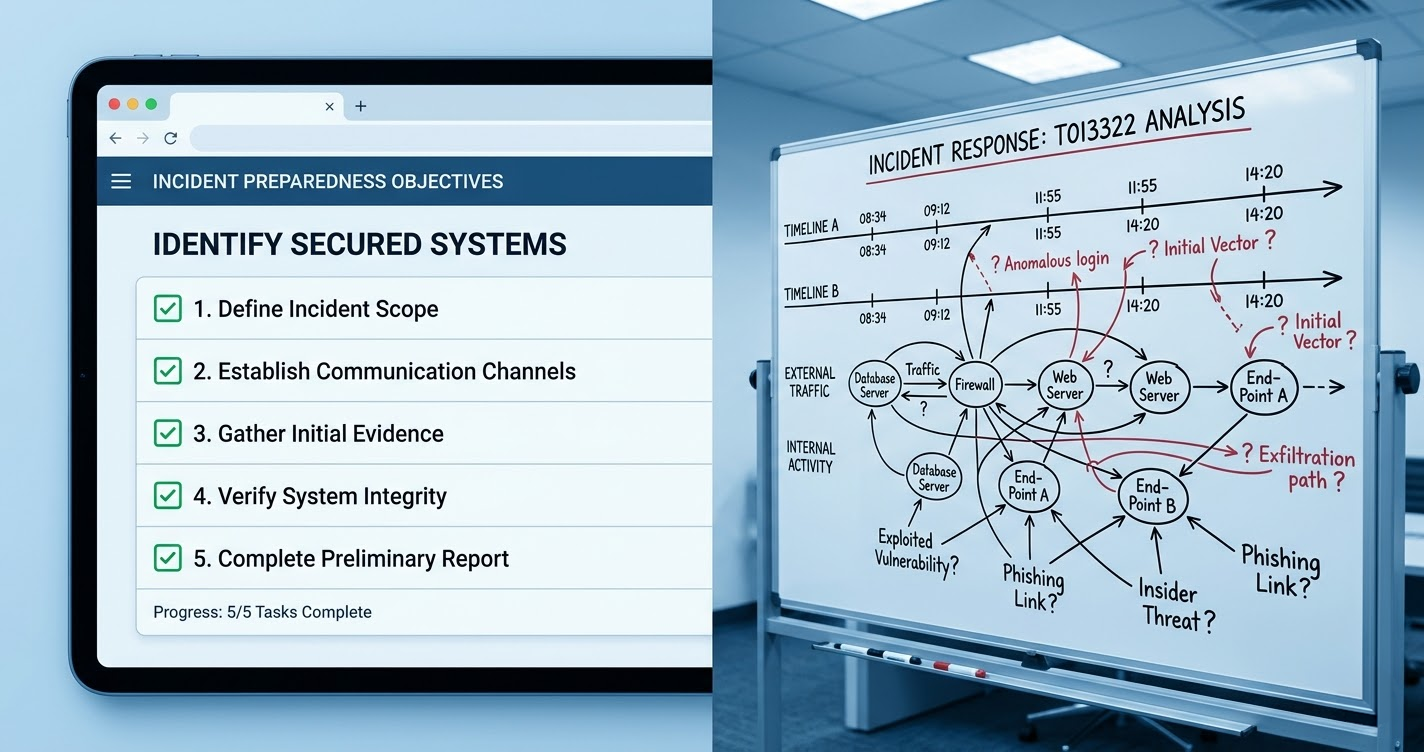
A split image contrasting a structured guided task interface on the left with a complex, unresolved incident timeline on the right, illustrating the gap between training environments and real incident response.

TryHackMe Rooms Are Not as Easy as They Feel

During Advent of Cyber, a room felt manageable — not because the concepts were simple, but because the room told you which system to examine, confirmed that a threat was present, and guaranteed that completing the steps would surface an answer. That structure is useful for learning. It is also the exact thing that disappears in a real investigation. The gap between TryHackMe and real incident response is not difficulty. It is the absence of a defined answer. ...


March 20, 2026 · Mario Martinez Jr.
A security analyst at a dimly lit workstation with multiple monitors displaying alert queues, representing the calibration challenge of the first 90 days in a SOC role.

The First 90 Days in a Security Role Are Not on Any Cert Exam

In a live security environment, alerts fire without labels. No task question. No confirmation that something is there. No rubric for how long to spend on a given signal before surfacing it. The volume on day one is unlike anything a certification exam simulates, and the volume is not the problem. Calibration is. The credential gets you past the filter. What you do with alerts in the first 90 days determines whether you clear probation. ...

March 20, 2026 · Mario Martinez Jr.
A split image showing a security certification study guide on the left and a live SOC SIEM dashboard on the right, representing the gap between certification knowledge and operational security work.

Security+ Is Not the Cert the SOC Job Requires

CompTIA Security+ has a domain called “Security Operations.” It is the largest domain on the exam at 28%. CompTIA CySA+ has a domain called the same thing, at 33%. The Security+ version covers asset management, vulnerability management, identity controls, and incident response. The CySA+ version names specific tools in its exam objectives: Wireshark for traffic analysis, SIEM platforms for detection and correlation, VirusTotal for threat investigation. Security+ covers enough to recognize those concepts in a multiple-choice question. CySA+ covers enough to use them in an investigation. ...

March 20, 2026 · Mario Martinez Jr.

TryHackMe - Threat Modelling Walkthrough

Author: Mario Martinez Jr. (ku5e / Gary7) | TryHackMe USA Rank #76 | Top 1% Difficulty: Easy Topics: Threat Modelling, MITRE ATT&CK, DREAD, STRIDE, PASTA Link: Threat Modelling on TryHackMe Answers are redacted within the narrative to allow you to complete the tasks on your own, but a full table of answers is available at the end of this walkthrough. This room walks through four threat modeling frameworks used by security teams to identify, categorize, and prioritize risks. You apply each framework to realistic organizational scenarios, including a financial services company and an e-commerce payment processor. ...

March 15, 2026 · Mario Martinez Jr.

TryHackMe: Threat Intel & Containment

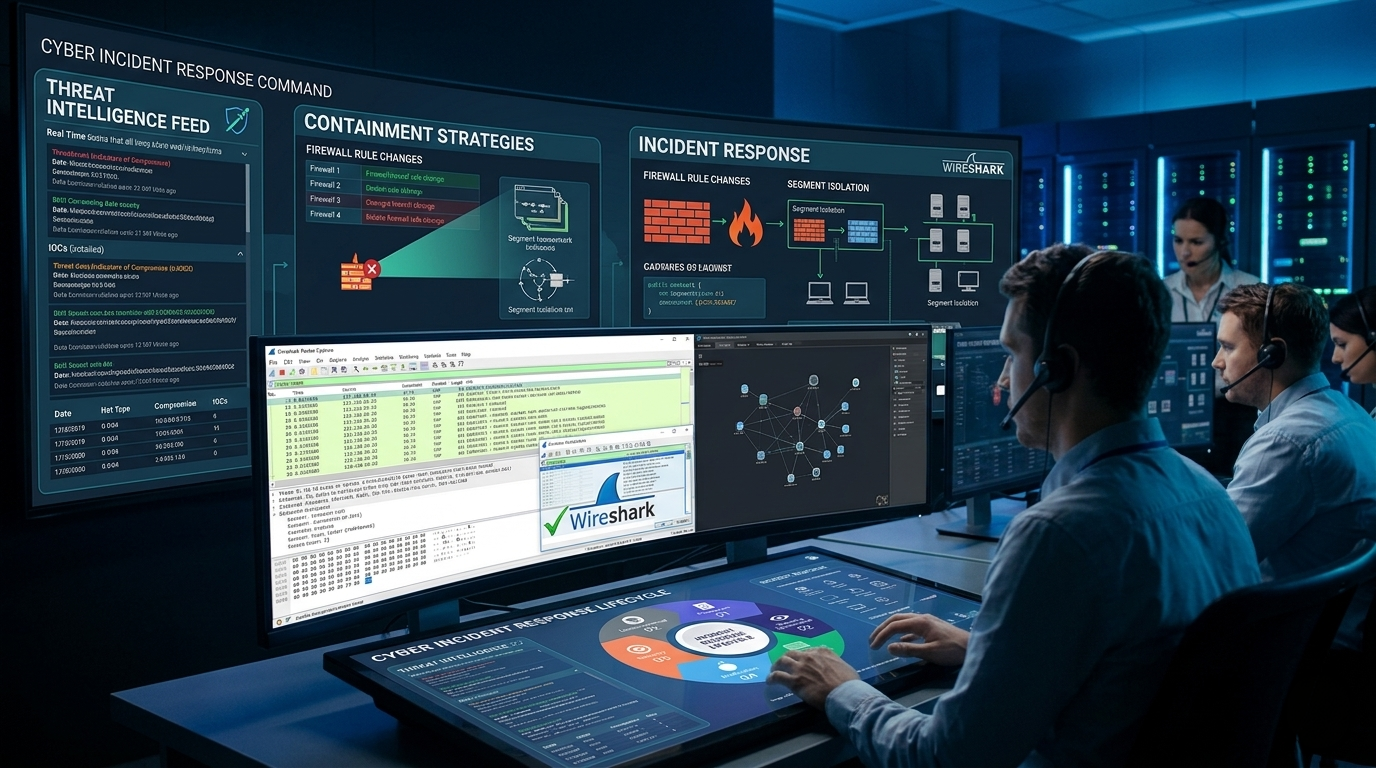
Author: Mario Martinez Jr. (ku5e / Gary7) | TryHackMe USA Top 1% Difficulty: Easy Topics: Threat Intelligence, Containment Strategies, Incident Response, Wireshark Answers are redacted within the narrative to allow you to complete the tasks on your own, but a full table of answers is available at the end of this walkthrough. This room is a lecture-heavy introduction to threat intelligence creation and containment strategies within the incident response cycle. Most tasks pair reading with a single comprehension question. The practical at the end drops a packet capture on the desktop and asks you to pull three specific values from the traffic. Wireshark filtering gets you there fast. ...

March 15, 2026 · Mario Martinez Jr.

TryHackMe: Tardigrade

Author: Mario Martinez Jr. (ku5e / Gary7) | TryHackMe USA Top 1% Difficulty: Easy Topics: Persistence Mechanisms, Backdoors, Incident Response, Linux Forensics Answers are redacted within the narrative to allow you to complete the tasks on your own, but a full table of answers is available at the end of this walkthrough. A server is already compromised. The attacker believes they cleared out. Your job is finding what they left behind before the machine goes back to production. The IR team has isolated the machine and handed you credentials for an account with root privileges. Five backdoors are planted somewhere on the system. Finding them requires knowing what a clean Linux install looks like. Anything that doesn’t match is a lead. ...

March 15, 2026 · Mario Martinez Jr.

TryHackMe: Identification & Scoping

Author: Mario Martinez Jr. (ku5e / Gary7) | TryHackMe USA Top 1% Difficulty: Easy Topics: Incident Response, Security Alerts, Asset Inventory, IoC Management Answers are redacted within the narrative to allow you to complete the tasks on your own, but a full table of answers is available at the end of this walkthrough. This room positions you as an incident responder at SwiftSpend Financial (SSF), a fictional organization facing a potential security compromise. You work through a series of support tickets in Outlook, cross-reference an Asset Inventory, and populate a Spreadsheet of Doom (SoD) with indicators of compromise. The room frames itself around identification, scoping, and the feedback loop between the two. In practice, it functions as an email reading exercise where you extract IoCs from ticket exchanges and map them to organizational assets. ...

March 15, 2026 · Mario Martinez Jr.

TryHackMe: Eradication and Remediation

Author: Mario Martinez Jr. (ku5e / Gary7) | TryHackMe USA Top 1% Difficulty: Medium Topics: Incident Response, Eradication, Remediation, MITRE ATT&CK, Jenkins, Cyber Kill Chain Answers are redacted within the narrative to allow you to complete the tasks on your own, but a full table of answers is available at the end of this walkthrough. This is the fourth room in the Live IR Module, picking up after Preparation, Identification and Scoping, and Threat Intel and Containment. By this point the scope is set and the bad guys are identified. The job now is to remove them cleanly, patch what let them in, and bring systems back online without handing the attacker a warning signal in the process. The room tests your sleuthing ability as much as your IR theory — and the MITRE ATT&CK Framework proves its worth again. ...

March 15, 2026 · Mario Martinez Jr.
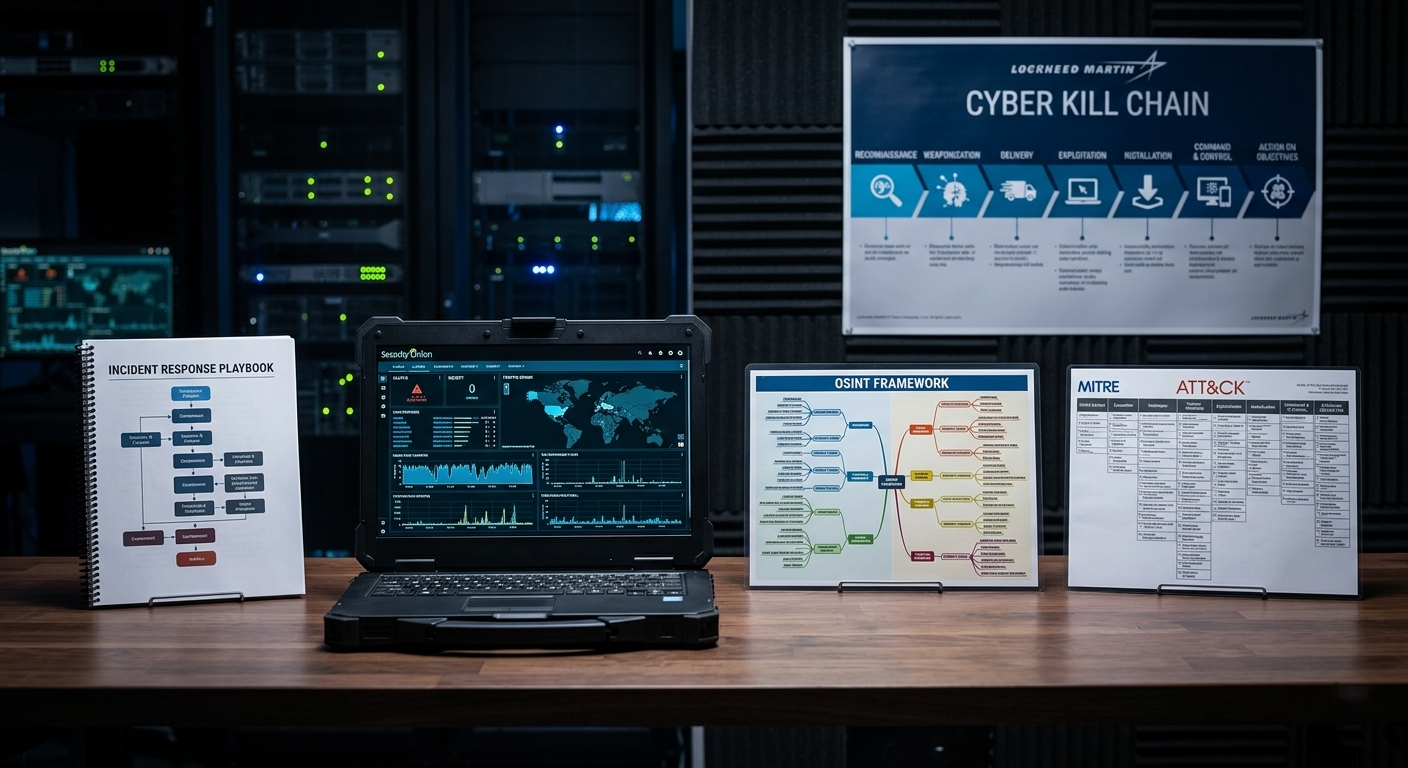
Five cybersecurity tools laid out on a workbench: a playbook, Security Onion dashboard, OSINT Framework, MITRE ATT&CK matrix, and the Lockheed Martin Kill Chain poster.

Stop Installing Enterprise Security Tools Before You Can Use Them

The first cybersecurity tool most people install is a SIEM. A SIEM without the fundamentals is a dashboard full of alerts you cannot interpret. The pattern repeats: someone decides to get into cybersecurity, reads a list of enterprise tools, installs a Splunk trial or a commercial EDR, stares at it for two weeks, and concludes that security work is too complex to break into. The tool was not the problem. The sequence was. ...

March 15, 2026 · Mario Martinez Jr.
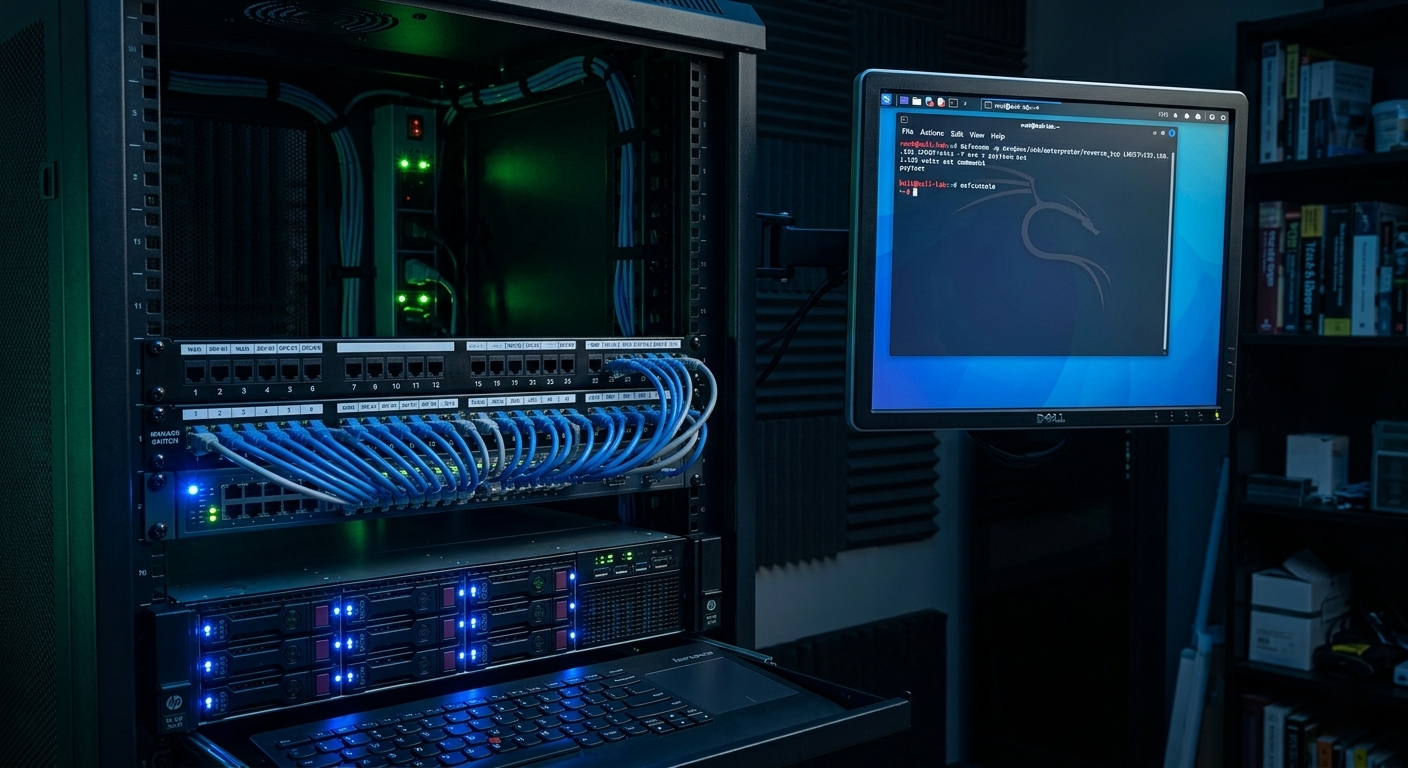
A homebuilt rack server in a home cybersecurity lab with a Kali Linux terminal open on a monitor.

I Built a Cybersecurity Home Lab for Free. So Can You.

My first home lab was five used computers networked together with old vulnerable routers I picked up for almost nothing. Each machine had a specific role. It worked, but it was loud, it took up space, and maintaining five physical boxes taught me more about cable management than cybersecurity. Now I run VirtualBox on a homebuilt rack server. Same concept, a fraction of the footprint. The most common thing I hear from people trying to break into cybersecurity is that they don’t know where to start. The lab is where you start. And it costs nothing. ...

March 15, 2026 · Mario Martinez Jr.